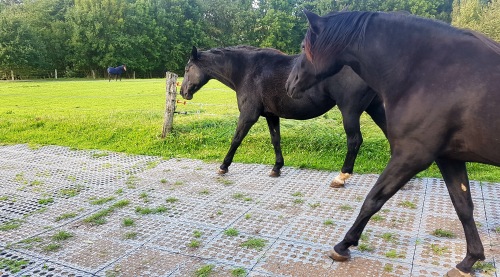
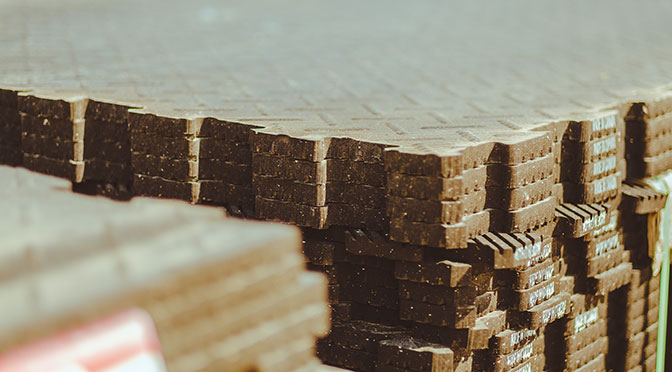
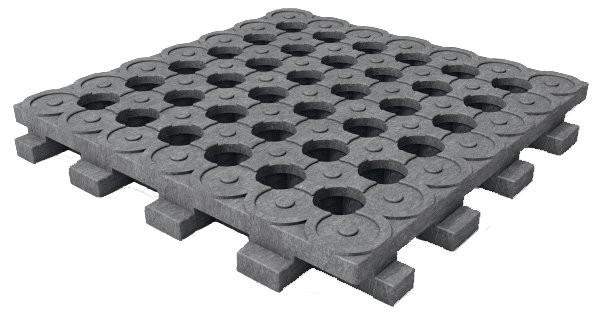
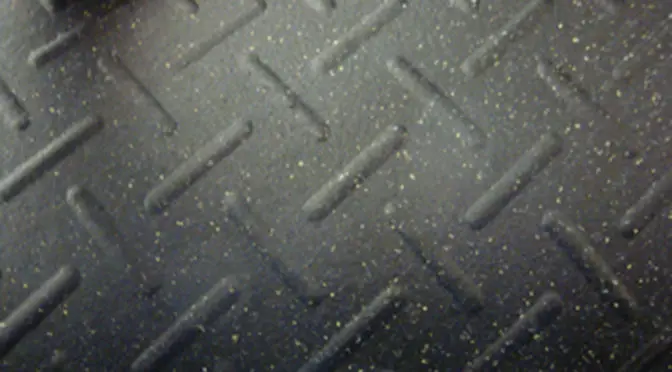
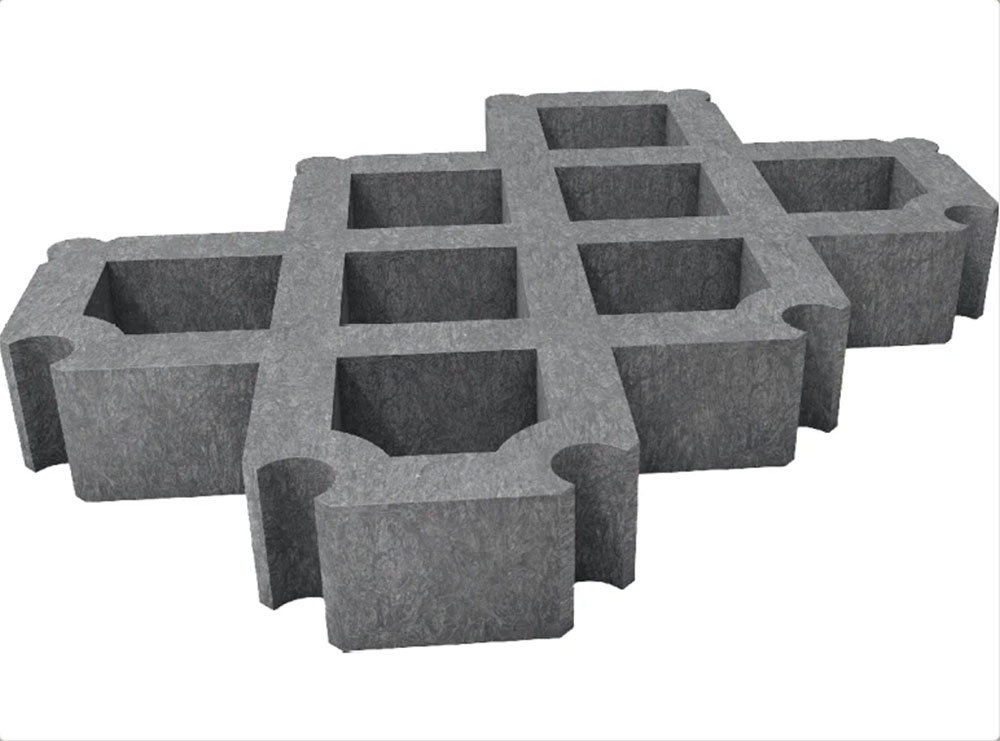
» Ideal aperture size for horses » Excellent water drainage through the surface » Durable, non-rotting and weather resistant » Minimal ground preparation required » Frost and UV-resistant » Low maintenance and cost effective throughout the product life » Interlocking design enables easy and quick installation » Easy to extend or remove at any time » Over 21 million square feet installed over past 20 years Manufactured from 100% recycled plastics Individual Grid: Length: ~19.5” Width: ~19.5” Height: 2 1/8” Weight: 15 lbs Coverage: 2.63 sqft LAYING INSTRUCTIONS: In most cases, including horse or tractor use, Mud Control Grids can be laid directly onto mud without any ground preparation. For very soft ground, longer lasting installations or even just a more attractive finish, follow the steps below: Step 1 Before installing the grids, a 2” gravel layer will improve support and drainage for very soft ground. A 2–4” layer of wood chips can also be used to create a flexible base. Step 2 Mark out and level the installation area, filling any dips or depressions with granular material. For soil types like heavy clay, installing a non-woven needle-punched 3.5 oz geotextile (with 6” overlap) will prevent the gradual loss of infill material into the ground. Step 3 Use a string line as a level and alignment guide (allowing for adjacent edging or fencing). Lay the grids along the line, leaving a ¼” gap between grids. Use the tabs on the Mud Control Grid edges for level alignment. Step 4 It’s best to stagger the grids for extra stability. To create a staggered bond, begin the second row with a half grid (grids can be cut with a skill or bench saw, just like hardwood). Lay the second row, leaving a ¼” gap between the first row and between each new grid. Use the other half grid at the end of the row. Small adjustments to maintain alignment can be done with a lever. Step 5 When the Mud Control Grids have been installed, the grid holes can be filled with permeable material. Coarse sharp sand is ideal or ¼–⅝” gravel can also be used. A ton of sand or gravel will fill around 140 grids (375 ft2 ). NB. If using gravel, make sure all gravel is cleared from the surface before use. Step 6 ALWAYS use a topping layer (sand or similar), especially when Mud Control Grids are to be used by animals or livestock. We recommend a final 2–4” layer of quarried sharp sand – not recycled sand. Top up the sand each year to keep surfaces looking good and in top condition. Expansion Mud Control Grids expand by ¼ ” per unit per 50°F/10°C change. The recommended ¼” gap between grids covers a temperature change of over 140°F/60°C. For very large areas, a 2” gap can be introduced every 100 grids if desired.