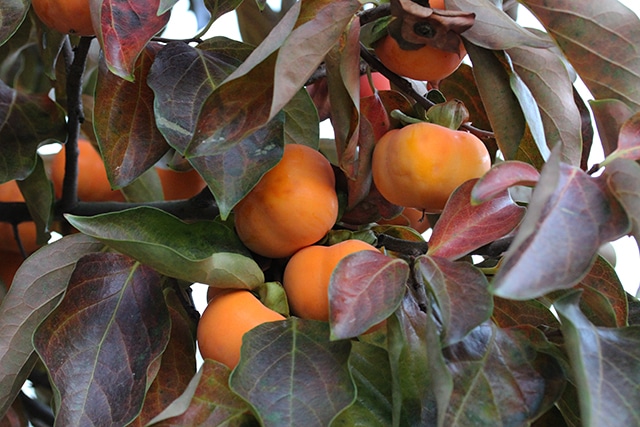
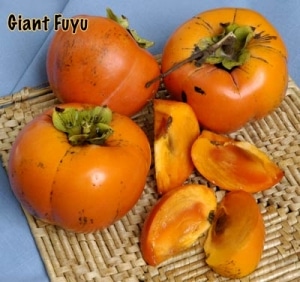
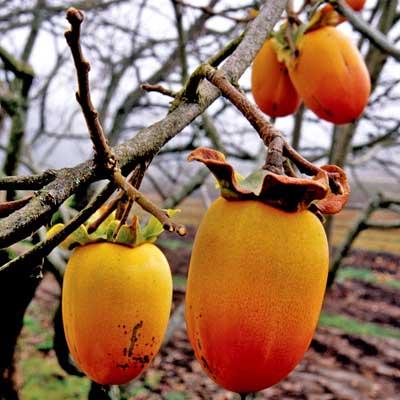
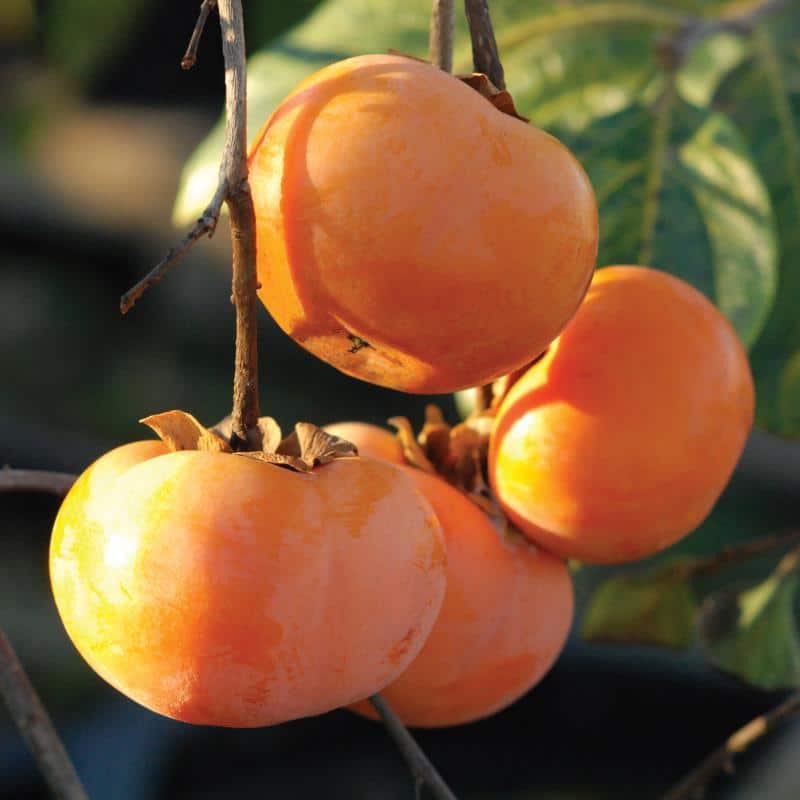
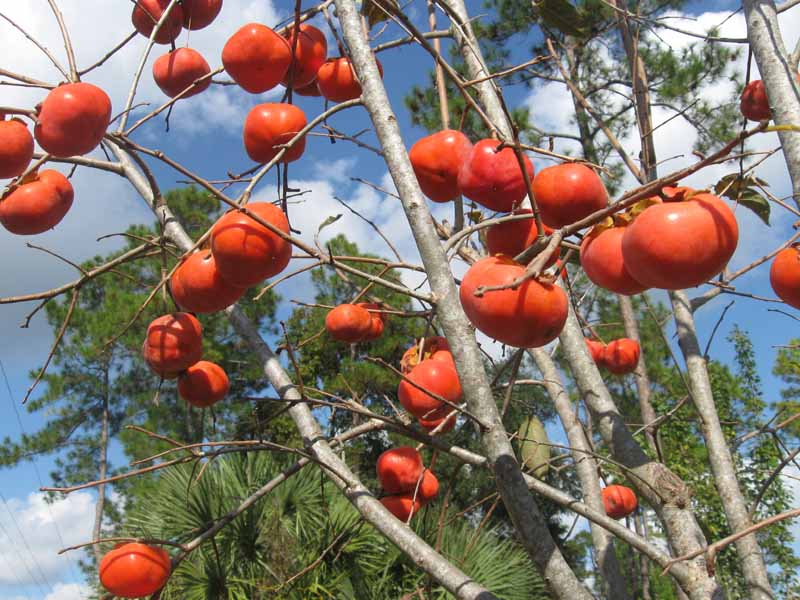
Description Nikita’s Gift is a hybrid persimmon developed by crossing Asian persimmon (Diospyros kaki) with American persimmon (Diospyros virginiana). The result is a unique tree that bridges the gap between the two species—offering Asian-style fruit with improved cold tolerance and adaptability. The fruit is larger and smoother than most American persimmons and ripens to a deep orange-red. Like astringent Asian persimmons, Nikita’s Gift must fully soften before eating. When properly ripe, the fruit becomes rich and sweet, with the tannins fully resolved. Nikita’s Gift is valued for its ability to ripen fruit in regions that are marginal for traditional Asian persimmons. Grafted onto American persimmon seedling rootstock, it forms a resilient tree well suited to growers seeking improved cold hardiness without sacrificing fruit quality. Overview Hybrid of Asian and American persimmon. Astringent until fully soft and ripe. Larger, smoother fruit than most American persimmons. Improved cold tolerance over Asian persimmons. Well suited to regions with cooler winters. Growing Details Latin Name: Diospyros kaki √ó Diospyros virginiana ’Nikita’s Gift’Site and Soil: 1/2 day to full day of sun; well-drained soilRootstock: Grafted onto American persimmon seedling rootstockHardiness: USDA Zones 6–9Bearing Age: 1–3 yearsSize at Maturity: Typically 15–25 ft tall and wide; easily maintained at a smaller size with routine pruningBloom Time: Late springRipening Time: Mid to late fall (typically October–November)Pollination Requirements: Self-fertile; pollination may introduce seeds but is not required for fruit setPests & Diseases: Generally low-pressure; good airflow and drainage reduce issues Additional Notes Grower’s Insight: Nikita’s Gift is often chosen by growers who want Asian-style persimmons but need better cold tolerance. Regional Insight: Performs especially well in the Pacific Northwest, Mid-Atlantic, and colder edge zones where Asian persimmons can struggle. Fruit must be fully soft before eating to avoid astringency. Texture and sweetness improve noticeably after a light frost. Explore more persimmons in our collection: Persimmon Trees